What it is
Emotions is Phorb's couples mood tracker. It lives on the Today tab, the home screen of Phorb. You tap how you feel on an emotion wheel, and your partner sees it on their phone a moment later. A check-in takes a few seconds, so you can share your mood with your partner in the middle of a busy day without writing a message or filling in a quiz.
How it works in Phorb
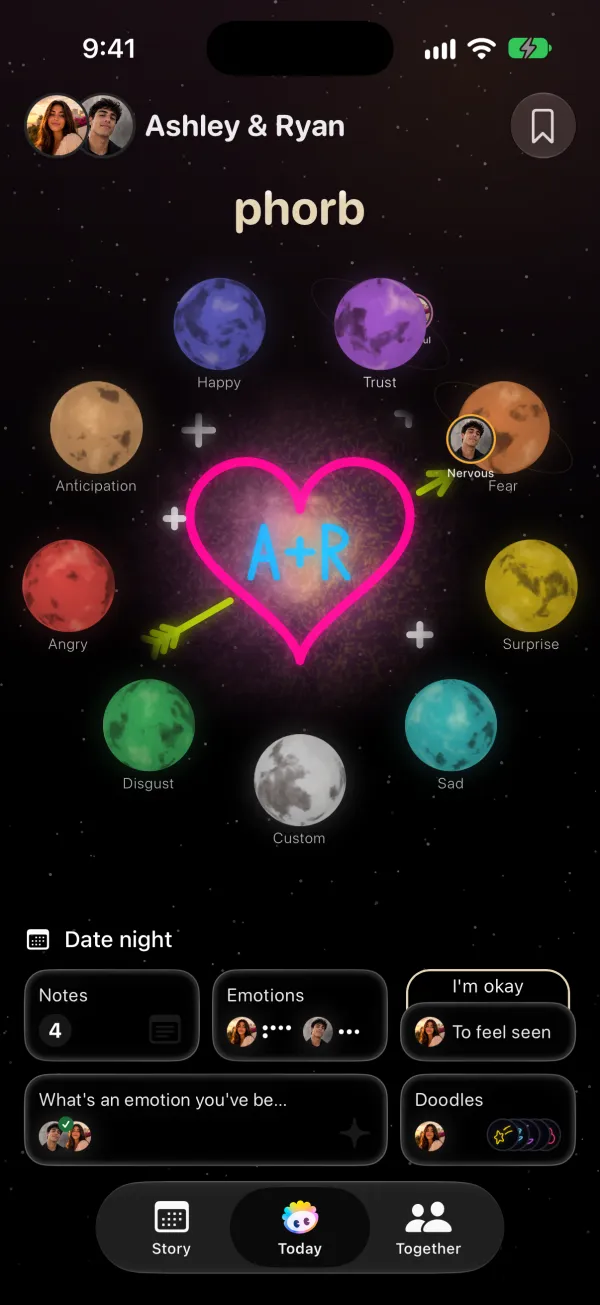
- Open the Today tab. The wheel appears as eight planets, one per emotion family: Happy, Trust, Fear, Surprise, Sad, Disgust, Angry and Anticipation. Your photo and your partner's orbit among them, tinted with each of your latest emotions.
- Tap a planet. Its specific words open around it, such as Lonely, Hurt and Grief around Sad, or Anxious, Nervous and Worried around Fear. The wheel holds 37 words in all.
- Tap the family itself or one of its words. If your mood is mixed, open another family and add a second feeling. One check-in holds up to two.
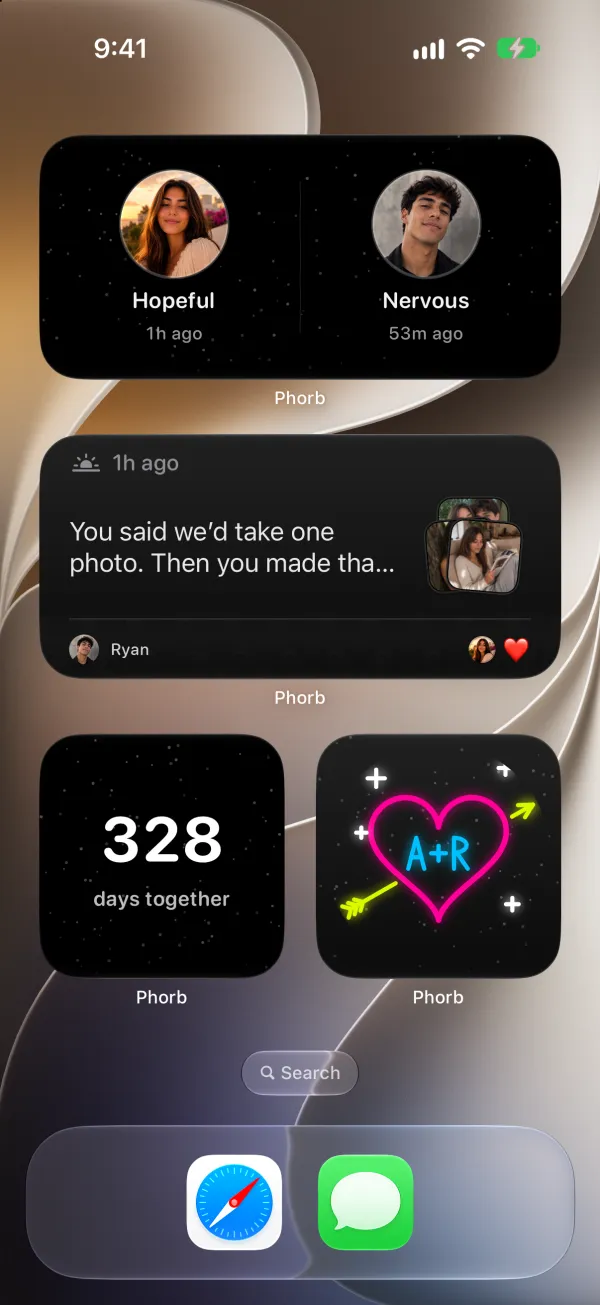
- Tap Share. Your partner gets a notification that you updated your emotion, and your feeling appears on their Today screen.
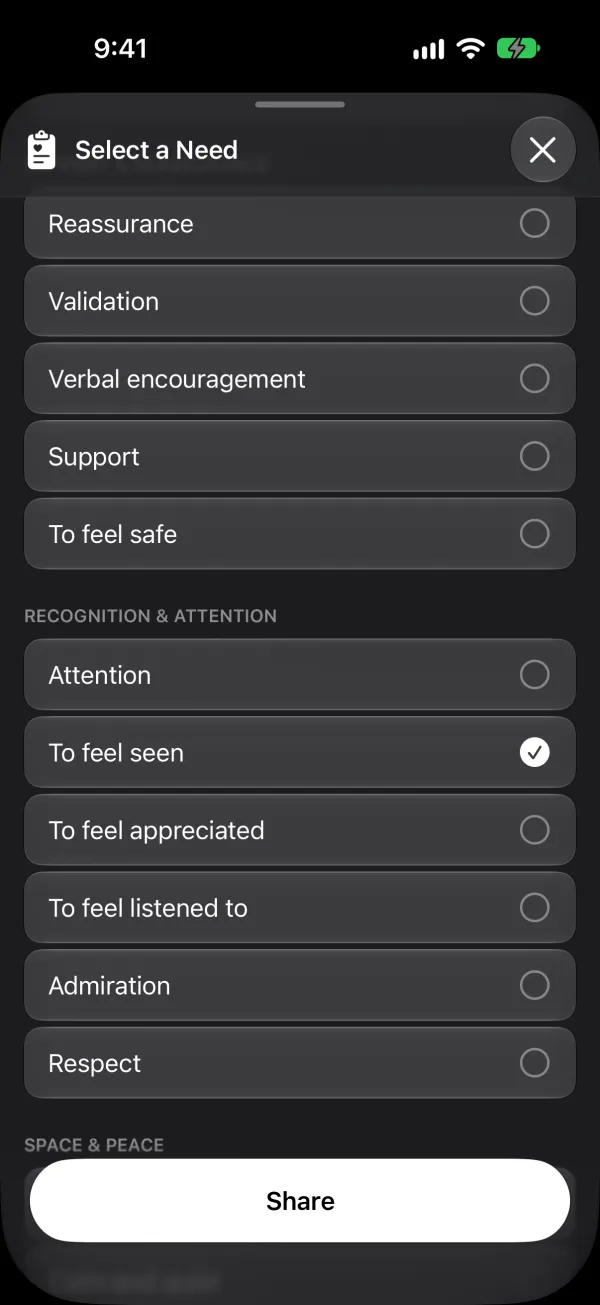
- Right after you share, a Share a need button appears for a few seconds. Tap it if you want to say what would help, or let it fade.
- If your partner has gone quiet, tap Ask on the Emotions card (the button shows their name). They get a notification that you want to know how they're feeling.
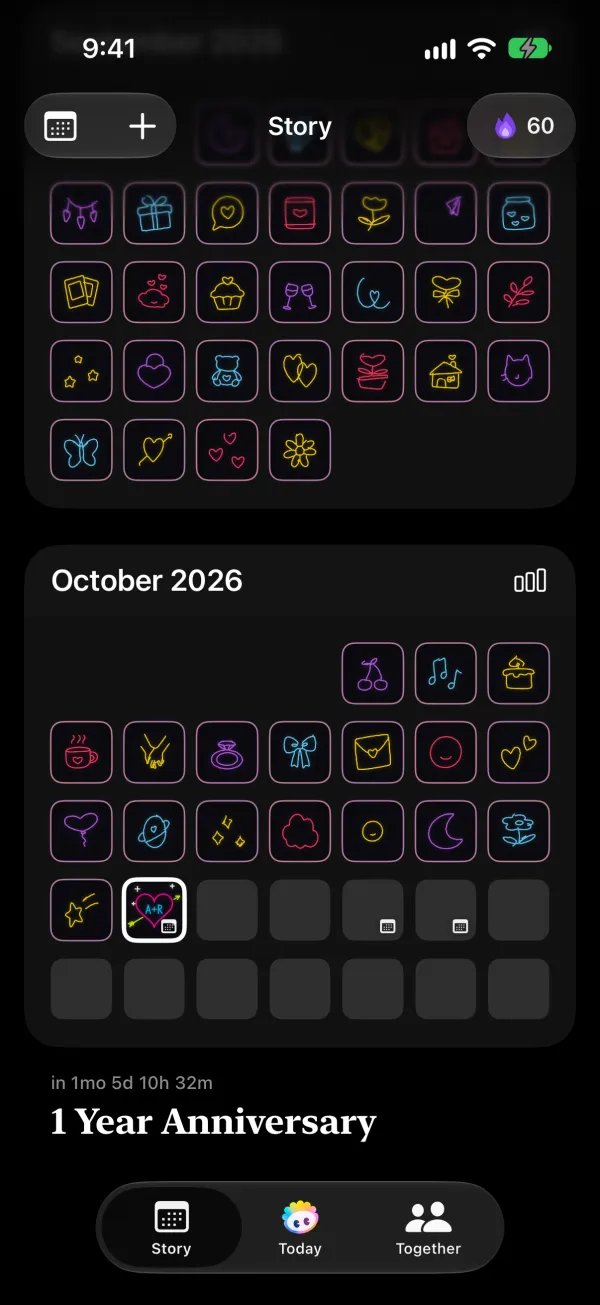
Your partner can react to any emotion with an emoji. Every check-in also lands in Story, so you can scroll back through past days. If you like a target, set a Daily goal for how many emotions to log each day. When you both check in on the same day, your Streak together grows by one.
Why it helps
Putting a word on a feeling does some work by itself. In a brain-imaging study, people who labeled the emotion in a negative picture showed less activity in the amygdala, the brain's threat detector, than when they processed the same picture another way (Lieberman et al., 2007). A precise word also gives your partner more to work with. "Disappointed" opens a conversation that "fine" shuts down.
Sending that word to your partner is a small bid for connection. The Gottman Institute defines a bid as any attempt to get your partner's attention, affirmation or affection (Turn Toward Instead of Away). In the Gottman study it describes, newlyweds who were still married six years later had turned toward each other's bids 86% of the time. Couples who divorced averaged 33%. When your partner sees Stressed at 3 pm and texts you back, they turn toward you.
The real conversation still happens between the two of you. A check-in gives your partner something specific to ask about tonight.
Ideas to try
- Long distance. Log a feeling when you wake up and again before bed. Your partner sees your morning before their evening call, even across time zones.
- Busy weeknights. Check in on the way home. Your partner knows whether Tired or Excited is walking through the door before you open it.
- After a disagreement. If talking still feels hard, pick the word that fits, such as Hurt or Frustrated. Your partner learns where you are without restarting the argument.
- When you can't find the word. Open a family and read its words out loud. Our feelings wheel uses the same families and words, so you can practice there first. For more words, our list of emotions sorts 140 of them from mild to intense.
- Good days. Share Grateful, Hopeful or Joyful when things go well. Your partner wants that news too.